Keep a printable copy in English or Italian. English PDF ↓ PDF italiano ↓
A little piece of Italian autumn, reimagined as a cupcake. Chestnut flour, raisins, pine nuts and rosemary give the crumb its rustic character, while a soft mascarpone cream and crystallised rosemary bring a lighter, more delicate finish.
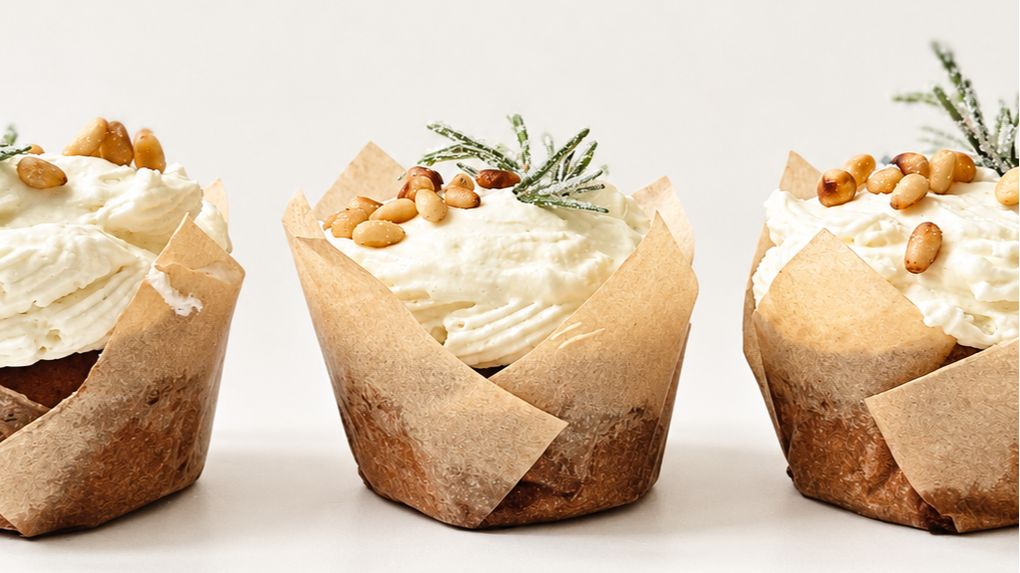
Some desserts belong to a place before they belong to a recipe. Castagnaccio is one of them: chestnut flour, pine nuts, raisins and rosemary — simple ingredients with a deeply Italian memory.
This time, I wanted to preserve those familiar flavours while changing their form. The castagnaccio became a small cupcake: soft and rustic, finished with a fresh mascarpone cream and a rosemary sprig that looks as though it has been touched by the first frost.
Because living traditions are not afraid to change shape.
Castagnaccio cupcakes: the ingredients.
These cupcakes begin with the flavours that define traditional castagnaccio, but each ingredient has been balanced to create a softer crumb and a more delicate finish. The complete quantities are waiting in the recipe card below; here is what each element brings.
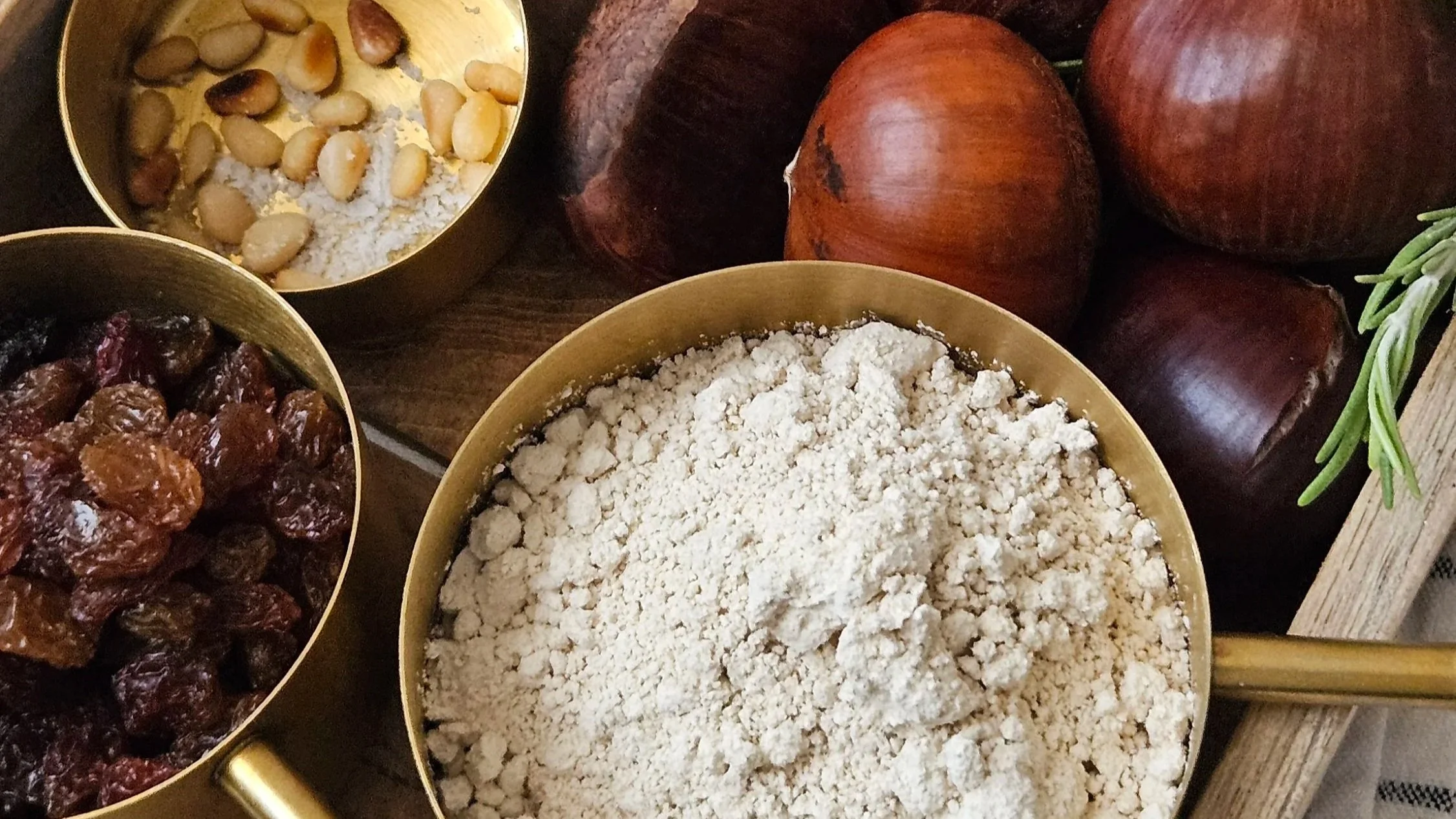
Chestnut flour — The heart of the recipe. Naturally sweet, earthy and unmistakably autumnal, it gives the cupcakes their deep colour and characteristic chestnut flavour.
Italian 00 flour — A small amount provides the structure that chestnut flour cannot create on its own, while keeping the crumb soft rather than heavy.
Brown sugar and chestnut honey — Brown sugar brings warmth and moisture; chestnut honey adds a darker, slightly bitter note that deepens the flavour without making the cupcakes overly sweet.
Vegetable oil and whole milk — Together they keep the crumb moist and tender, allowing the chestnut flour to remain the protagonist.
Raisins and toasted pine nuts — Two essential echoes of traditional castagnaccio. The raisins add small pockets of sweetness, while toasted pine nuts bring texture and a delicate nuttiness.
Fresh rosemary — Only a few finely chopped needles are needed. Rosemary should quietly lift the chestnut flavour, never overpower it.
Mascarpone cream — Fresh, soft and only lightly sweetened, it balances the rustic cupcake. A very small amount of gelatine helps it hold its shape while keeping it creamy rather than stiff.
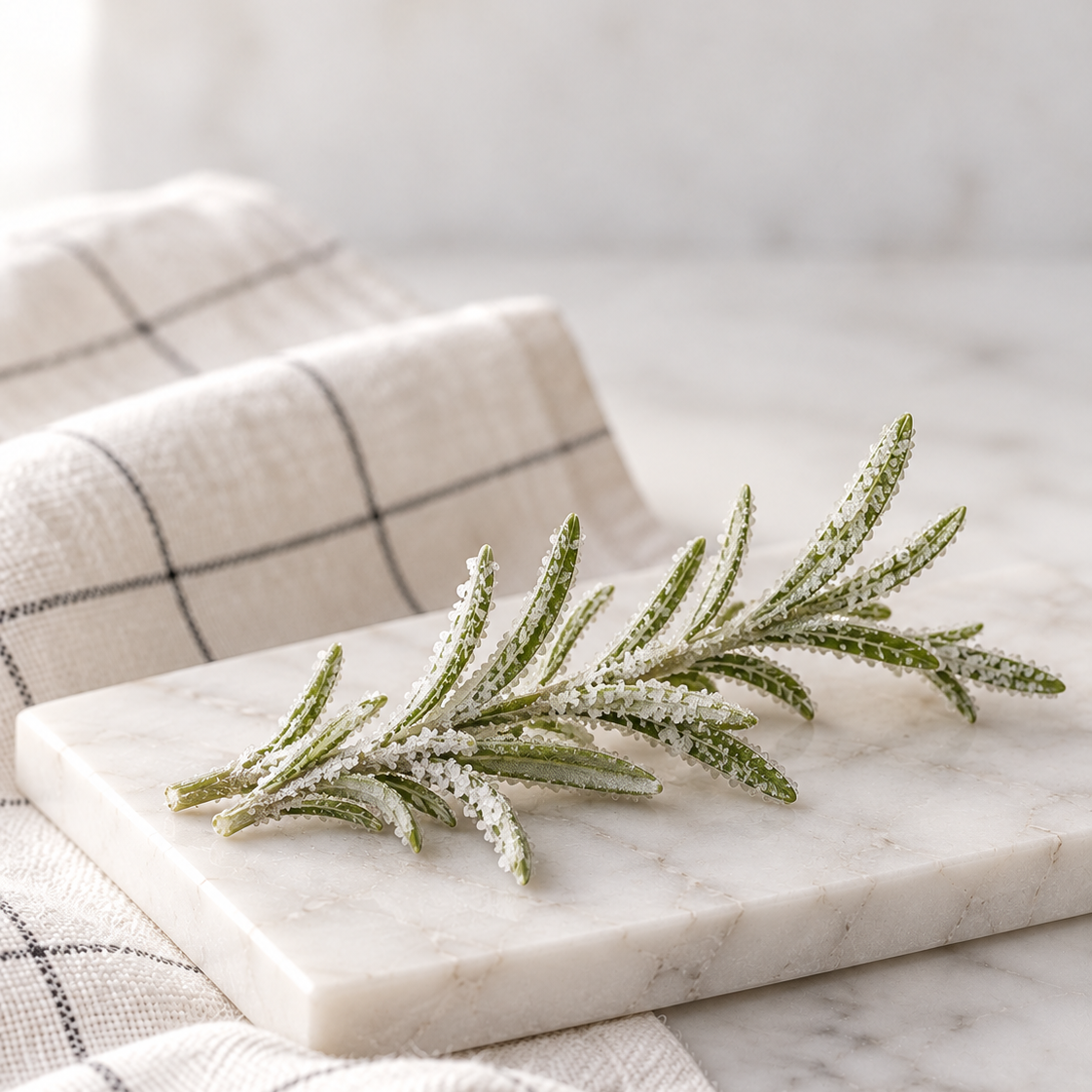
Crystallised rosemary — The final GHC detail: a small sprig covered in sugar, as though it had been touched by the first frost.
Familiar ingredients, rearranged into something new — still unmistakably castagnaccio, simply wearing a different dress.
1. Begin with the crystallised rosemary.
Gently heat equal quantities of water and sugar, only until the sugar has dissolved, then allow the syrup to cool completely. Brush each rosemary sprig with a very thin layer, wait approximately one minute and coat it in fine granulated sugar. Leave the sprigs to dry on baking parchment for 6–12 hours.
2. Prepare the raisins and pine nuts.
Soak the raisins in warm water for 10 minutes, then drain, gently squeeze and dry them thoroughly. Lightly toast the pine nuts, allow them to cool and divide them: 15 g for the batter and 10 g for the final decoration.
3. Make the batter.
Preheat the fan oven to 165°C and prepare six paper liners. Combine the chestnut flour, most of the 00 flour, baking powder and salt.
In another bowl, briefly whisk the egg and brown sugar by hand without trying to make them light and fluffy. Add the vegetable oil and chestnut honey, followed by the milk.
Add the dry ingredients and mix only until the batter is evenly combined. Coat the raisins with the small amount of reserved flour, then fold them into the batter with the pine nuts and finely chopped rosemary.
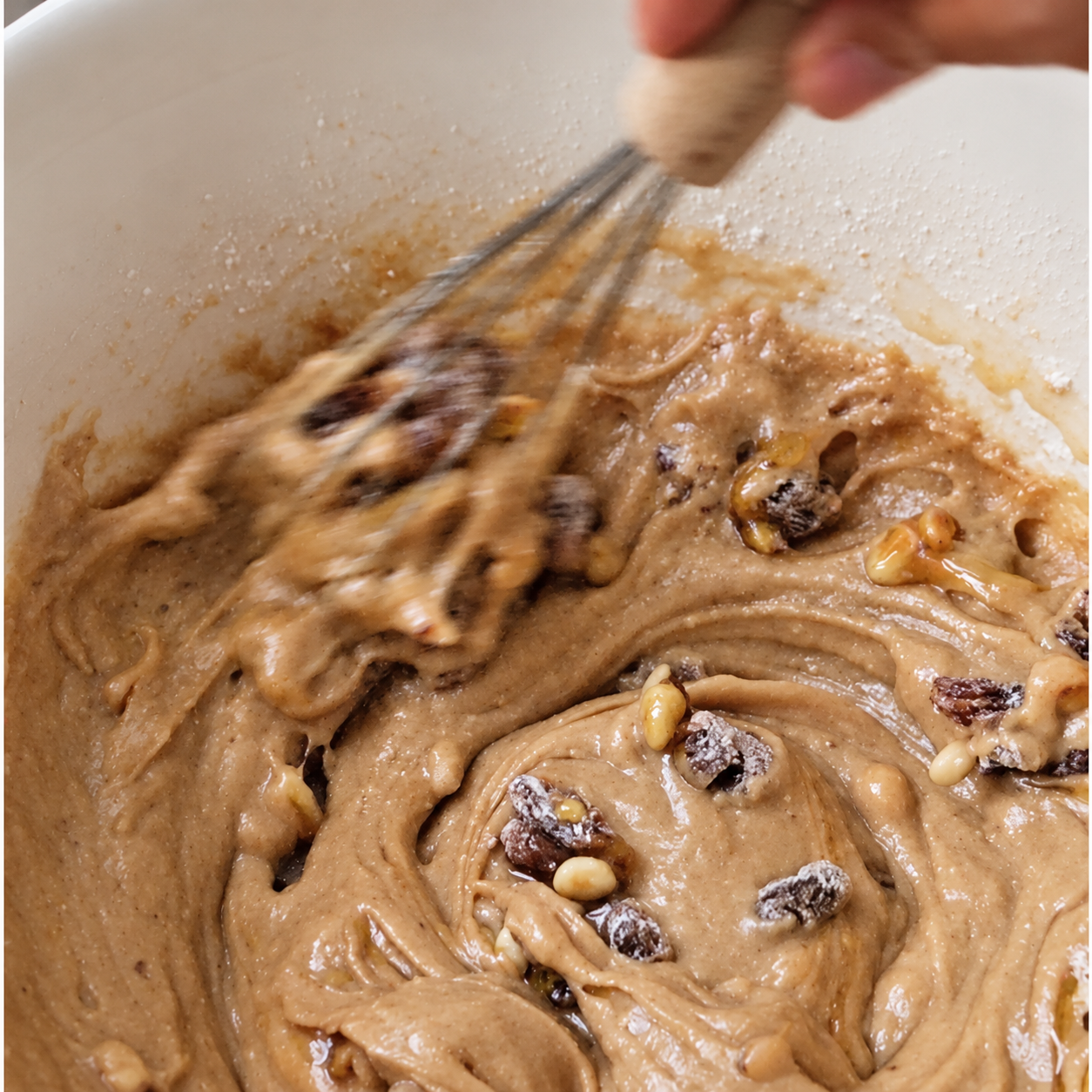
Fold in the raisins and toasted pine nuts, mixing only until evenly distributed.
4. Fill and bake.
Divide the batter evenly among the six paper liners, using 52–55 g for each one. Using more batter will make the cupcakes rise too much and begin to resemble muffins.
Bake on the second rack from the bottom for approximately 19–23 minutes. A skewer should come out without raw batter, although a few moist crumbs are perfectly fine. Leave the cupcakes in the tin for 5 minutes, then transfer them to a wire rack to cool completely.
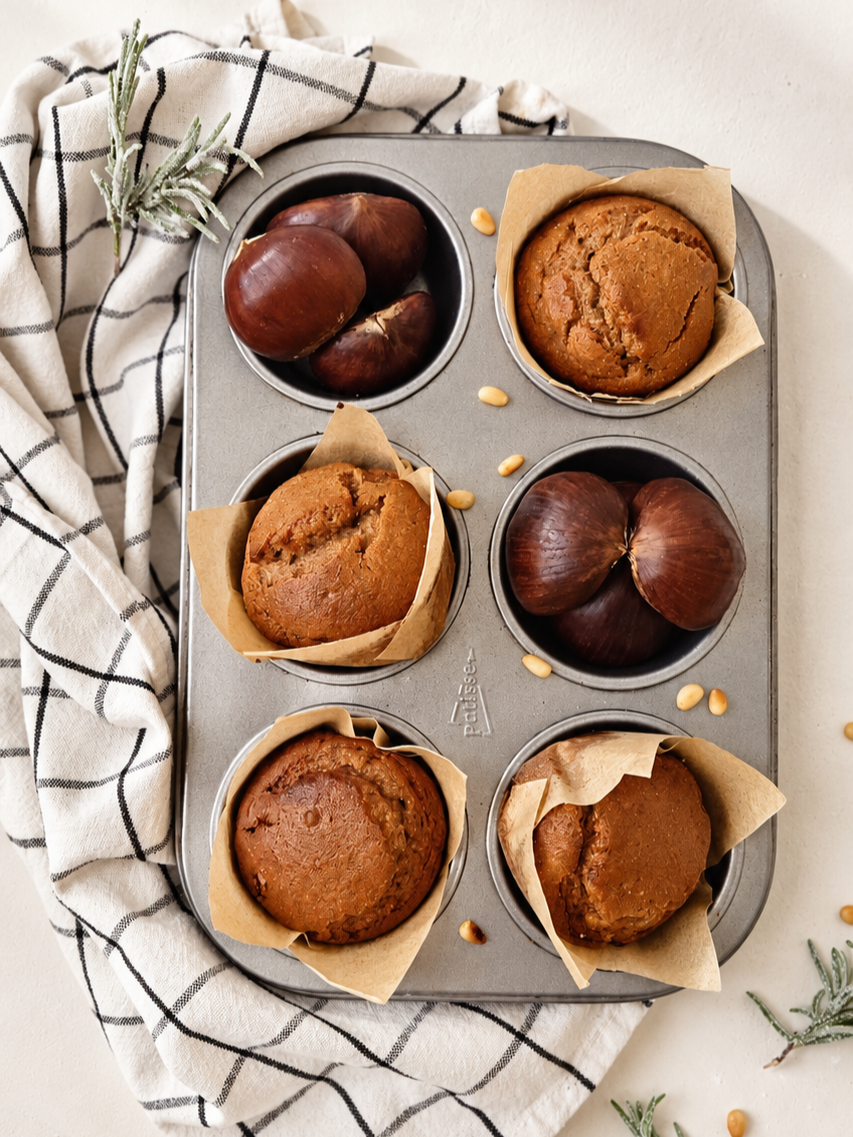
Bake until risen and set, then leave in the tin for 5 minutes before cooling completely.
5. Make the mascarpone cream.
Bloom the powdered gelatine in cold water for approximately 10 minutes. Take 20 g of cream from the total amount and heat it gently without boiling. Add the gelatine and stir until completely dissolved.
Briefly mix the cold mascarpone with the icing sugar until creamy. Gradually add the warm cream and gelatine mixture, followed by the remaining cold cream. Whip at medium-low speed and stop as soon as the cream is soft, smooth and stable.
The cream should hold its shape without becoming stiff. Softness is part of the recipe.
6. Finish the cupcakes.
Spoon or pipe the mascarpone cream onto the completely cooled cupcakes, then shape it gently with the back of a teaspoon. Finish with the reserved toasted pine nuts and a crystallised rosemary sprig.
Add the rosemary shortly before serving so that the sugar remains dry, bright and delicately frosted.
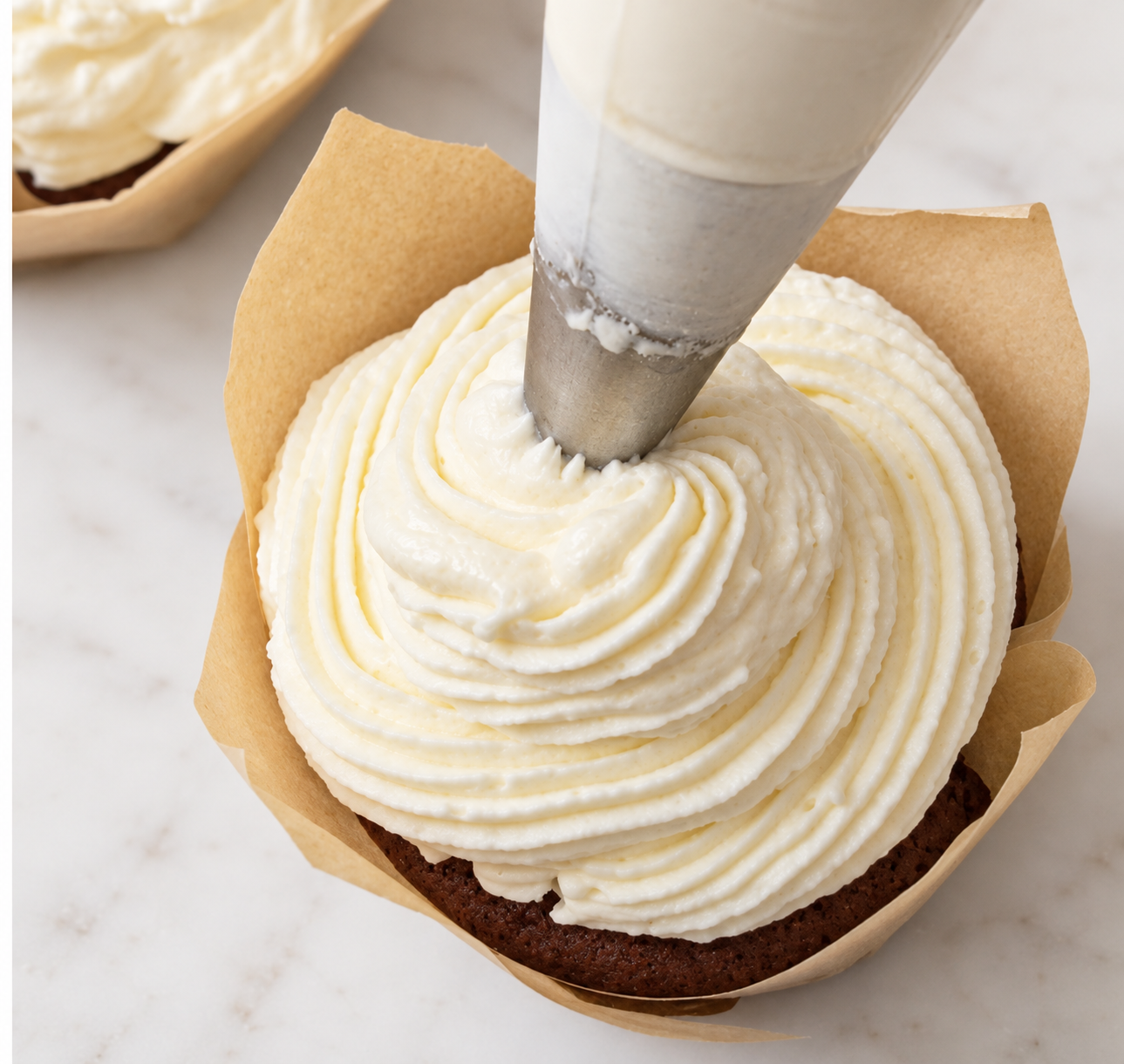
Pipe or spoon the mascarpone cream onto the completely cooled cupcakes.
GHC Kitchen Notes.
Weigh the batter.
Divide the batter evenly among the six paper liners, using 52–55 g for each one. Adding more will make the cupcakes rise excessively and take on the shape of muffins.
Dry the raisins carefully.
After soaking, drain and dry the raisins thoroughly. Coat them lightly with a little flour taken from the measured amount: this helps prevent them from sinking to the bottom.
Mix only as much as needed.
Once the flours have been added, mix only until the batter looks evenly combined. Overmixing will make the cupcakes less tender.
Use rosemary with restraint.
Four or five finely chopped needles are enough for the entire batter. Rosemary should complement the chestnut flavour, never become the first thing you taste.
Stop while the cream is soft.
Whip the mascarpone cream at medium-low speed and stop as soon as it holds its shape. It should remain smooth and creamy, not become firm like buttercream.
Prepare the decoration in advance.
The crystallised rosemary needs between 6 and 12 hours to dry completely. Prepare it first or, even better, the evening before.
Storage
Keep the decorated castagnaccio cupcakes in an airtight container in the refrigerator for up to 2 days.
Before serving, leave them at room temperature for approximately 15–20 minutes, so that the cupcake and mascarpone cream can soften slightly.
The undecorated cupcakes can be stored in an airtight container at room temperature for up to 2 days.
Keep the crystallised rosemary sprigs separately in a cool, dry place and add them only shortly before serving.
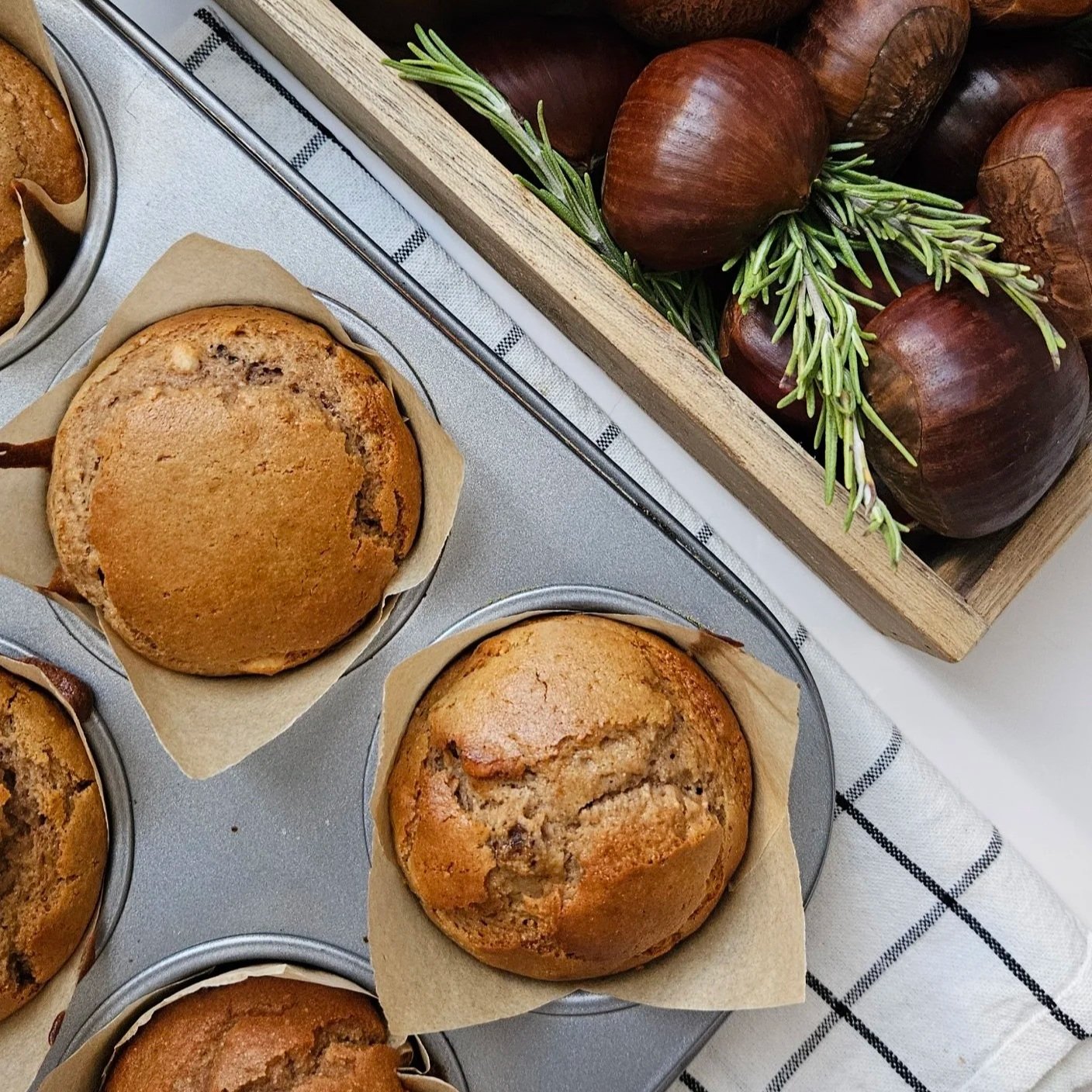
The Recipe
Traditional Italian castagnaccio flavours reimagined as six soft chestnut flour cupcakes, finished with a light mascarpone cream and crystallised rosemary.
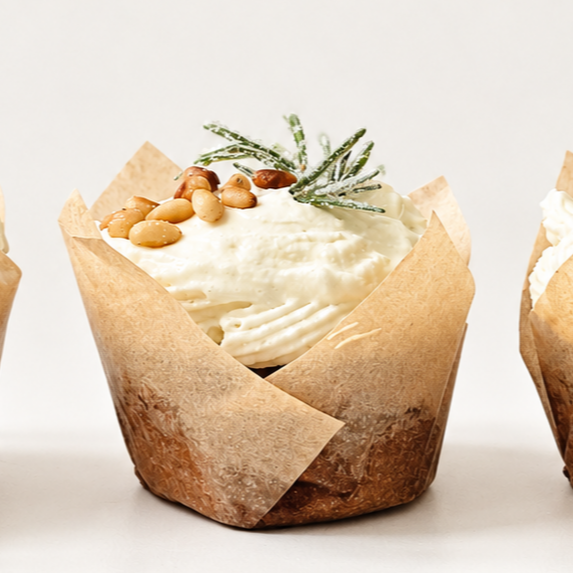
Makes: 6 standard cupcakes
Preparation: 35 minutes
Rosemary drying time: 6–12 hours
Cooling: Allow the cupcakes to cool completely
Oven: 165°C / 330°F fan
Position: Second rack from the bottom
Pan: Standard muffin tin with paper liners
Difficulty: Medium
Ingredients
FOR THE CUPCAKES
□ 75 g chestnut flour
□ 45 g Italian 00 flour
□ 50 g brown sugar
□ 4 g baking powder
□ A pinch of fine salt
□ 1 large egg,
approximately 55 g without the shell
□ 35 g vegetable oil
□ 70 g whole milk
□ 8 g chestnut honey
□ 25 g raisins
□ 25 g pine nuts
□ 4–5 fresh rosemary needles,
very finely chopped
FOR THE MASCARPONE CREAM
□ 100 g mascarpone, cold
□ 100 g whipping cream, very cold
□ 20 g icing sugar
□ 1 g powdered gelatine
□ 5 g cold water
FOR THE CRYSTALLISED ROSEMARY
□ 6 small rosemary sprigs
□ 10 g water
□ 10 g granulated sugar
□ Fine granulated sugar, as needed
Instructions
① Prepare the crystallised rosemary.
Heat the water and sugar gently, only until the sugar dissolves, then allow the syrup to cool completely. Brush the rosemary sprigs with a thin layer, wait 1 minute and coat them in fine sugar. Leave to dry on baking parchment for 6–12 hours.
② Prepare the raisins and pine nuts.
Soak the raisins in warm water for 10 minutes, then drain and dry them thoroughly. Lightly toast the pine nuts and allow them to cool. Reserve 15 g for the batter and 10 g for decorating.
③ Make the batter.
Preheat the fan oven to 165°C / 330°F. Combine the chestnut flour, most of the 00 flour, baking powder and salt.
Briefly whisk the egg and brown sugar by hand. Add the oil, chestnut honey and milk. Incorporate the dry ingredients, mixing only until combined.
Coat the raisins with the reserved flour, then fold them into the batter with 15 g of pine nuts and the finely chopped rosemary.
④ Bake the cupcakes.
Divide the batter evenly among the six paper liners, using 52–55 g for each one. Bake on the second rack from the bottom for 19–23 minutes. Leave in the tin for 5 minutes, then transfer to a wire rack and cool completely.
⑤ Prepare the mascarpone cream.
Bloom the gelatine in the cold water for 10 minutes. Heat 20 g of the cream without boiling and dissolve the gelatine in it.
Briefly mix the mascarpone with the icing sugar. Gradually add the warm gelatine mixture, followed by the remaining 80 g of cold cream. Whip at medium-low speed until soft, creamy and stable.
⑥ Finish the cupcakes.
Spoon or pipe the cream onto the completely cooled cupcakes and shape it gently with a teaspoon. Decorate with the reserved toasted pine nuts and crystallised rosemary shortly before serving.
Recipe Note
The crystallised rosemary should be prepared at least 6 hours in advance. If you prefer, make it the evening before and store it separately in a cool, dry place.