Keep a printable copy in English or Italian.
A rich, creamy baked chocolate cheesecake with a cocoa Digestive crust, a thin layer of dark chocolate ganache and a Barbera Appassimento and raspberry reduction. A dessert where the richness of chocolate meets a bright, gently tart, fruity finish.
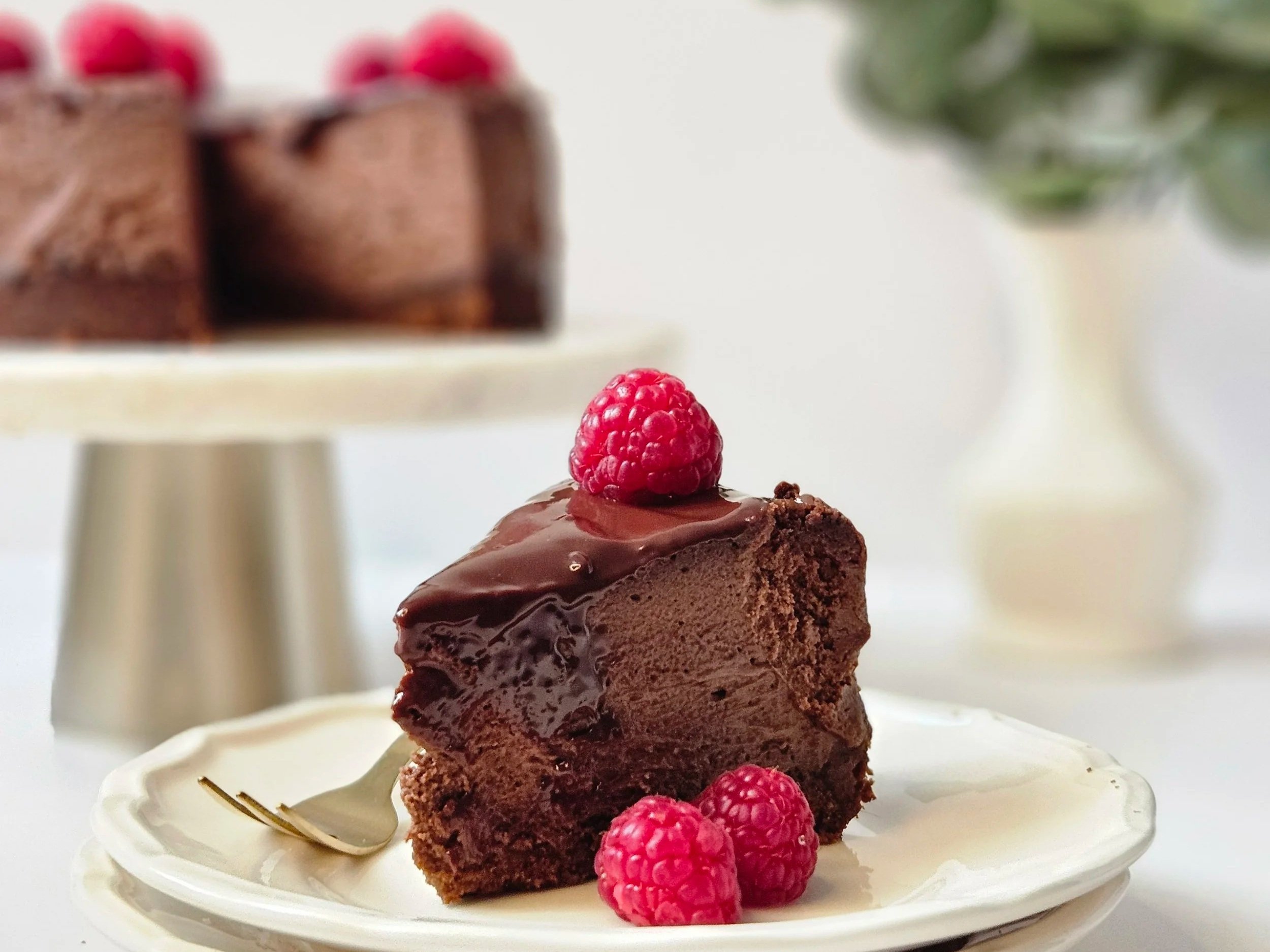
An American Classic, with a Piedmontese Accent
Dark chocolate already has a personality of its own. But what happens when you introduce a red wine, with its acidity and ripe fruit notes?
That contrast is where my Chocolate Cheesecake with Barbera Appassimento and Raspberries began.
A cocoa Digestive crust supports a rich, velvety chocolate filling, finished with a thin layer of dark chocolate ganache. The wine and raspberry reduction makes its entrance only when the cheesecake is ready to serve.
I chose to keep the reduction separate, allowing each element to retain its own character and giving you control over how much to add to each slice.
There is something particularly interesting about the texture of this cheesecake, too. Before baking, the filling is thick and airy, almost like a mousse. After a night in the refrigerator, it transforms: firm enough to slice neatly, yet wonderfully creamy when you take a bite.
This is a rich, substantial dessert, best enjoyed in modest portions. The reduction needs no grand gesture. Just a little is enough to bring everything together.
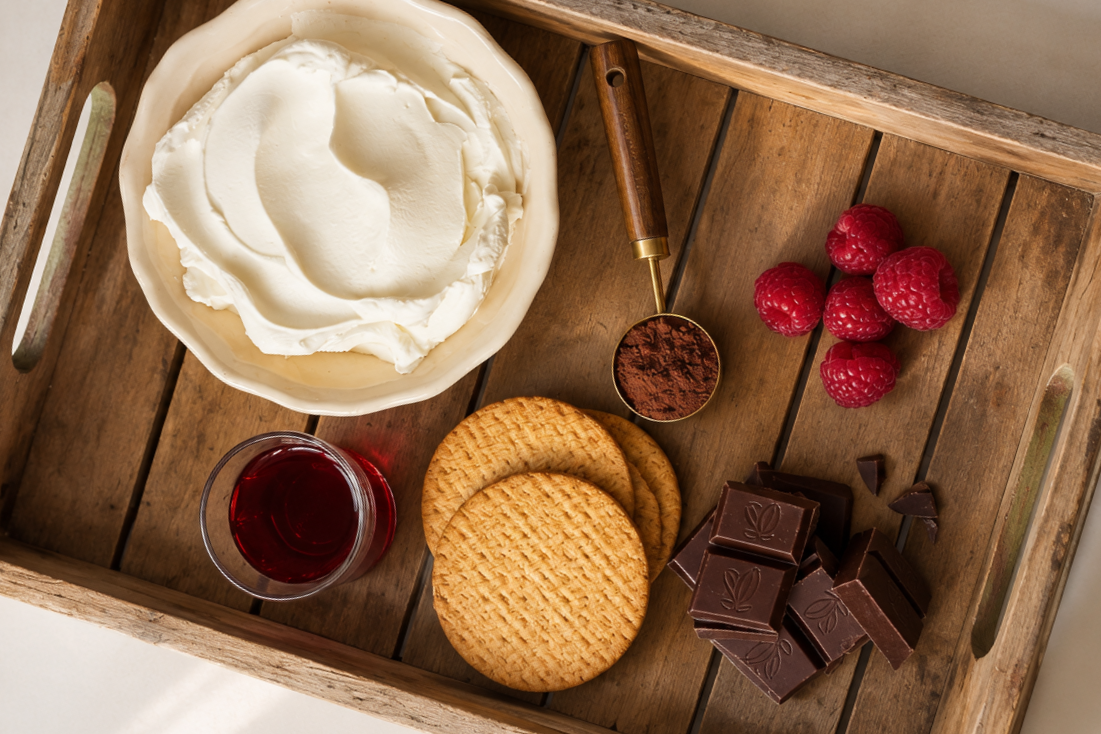
Chocolate Cheesecake: The Ingredients
This recipe has four components: the cocoa biscuit crust, the chocolate cheesecake filling, the ganache and the Barbera reduction.
Each has a particular role to play. You'll find the exact quantities in the recipe card below; here is why I chose these ingredients and what they contribute to the finished dessert.
The Cocoa Digestive Crust
Digestive biscuits — The crumbly foundation of the cheesecake. Finely crushed and mixed with melted butter, they create a compact base that supports the filling without needing to extend up the sides of the tin.
Unsweetened cocoa powder — Adds another layer of chocolate flavour and deepens the colour of the crust.
Butter — Binds the biscuit crumbs together. Before baking, the mixture should resemble wet sand: it needs to hold together when pressed.
The Chocolate Cheesecake Filling
Philadelphia Original — The foundation of the filling, contributing to its structure and creamy consistency. For this recipe, I use Philadelphia Original.
Sour cream — Introduces a gentle tang that balances the chocolate and makes the overall flavour more interesting.
55–60% dark chocolate — The main character. This cocoa percentage gives the cheesecake a pronounced chocolate flavour without making the filling excessively bitter.
Unsweetened cocoa powder — Reinforces the chocolate flavour and deepens the colour.
Cornflour (cornstarch) — Helps stabilise the filling as it bakes.
Eggs — Give the cheesecake its structure. They should be incorporated gently, without whipping air into the mixture.
Sugar, vanilla and salt — Bring the flavours into balance without overshadowing the chocolate.
The Dark Chocolate Ganache
For the topping, I use equal quantities of dark chocolate and whipping cream.
The result is a smooth, glossy ganache, spread in a thin layer over the completely cooled cheesecake.
It should stay on top rather than run down the sides. I want it to complement the filling, not conceal it.
The Barbera Appassimento & Raspberry Reduction
This is the element that gives the cheesecake its most distinctive note.
Barbera Appassimento — I chose this wine for its soft, fruity character, using it to create a reduction that complements the chocolate.
Raspberries — Bring freshness and acidity, as well as contributing to the deep red colour of the sauce.
Granulated sugar — Balances the acidity. I begin with 35 g and reserve another 10 g, adding it only after tasting, if needed.
Orange peel — Adds a subtle citrus fragrance without becoming the dominant flavour.
The reduction should remain intense and slightly tart. Tasted on its own, it may seem a little sharper than expected, but the cheesecake and ganache complete the balance.
How to Make Chocolate Cheesecake
There are several stages to this recipe, but they can be organised without rushing.
The cheesecake needs at least eight hours in the refrigerator, preferably overnight. The wine reduction can be prepared in advance, while the ganache should only be added once the cheesecake is completely cold.
1. Prepare the Tin and Ingredients
Use a 16 cm springform tin, at least 7 cm deep.
Remove the Philadelphia, sour cream and eggs from the refrigerator approximately 45–60 minutes before beginning, allowing them to come to room temperature.
Wrap the outside of the tin's base and the join between the base and the ring with aluminium foil.
2. Make the Cocoa Digestive Crust
Preheat the fan oven to 170°C.
Finely crush the Digestive biscuits and combine them with the cocoa powder and a pinch of salt.
Melt the butter, pour it over the crumbs and mix until the texture resembles wet sand.
Spread the mixture evenly over the bottom of the tin, without bringing it up the sides. Press it down with the flat base of a glass, taking care not to compact it too firmly.
Bake for 10 minutes, then remove from the oven and allow to cool slightly.
Reduce the oven temperature to 150°C fan.
The detail that matters: the crust should be even and compact, but not excessively compressed.
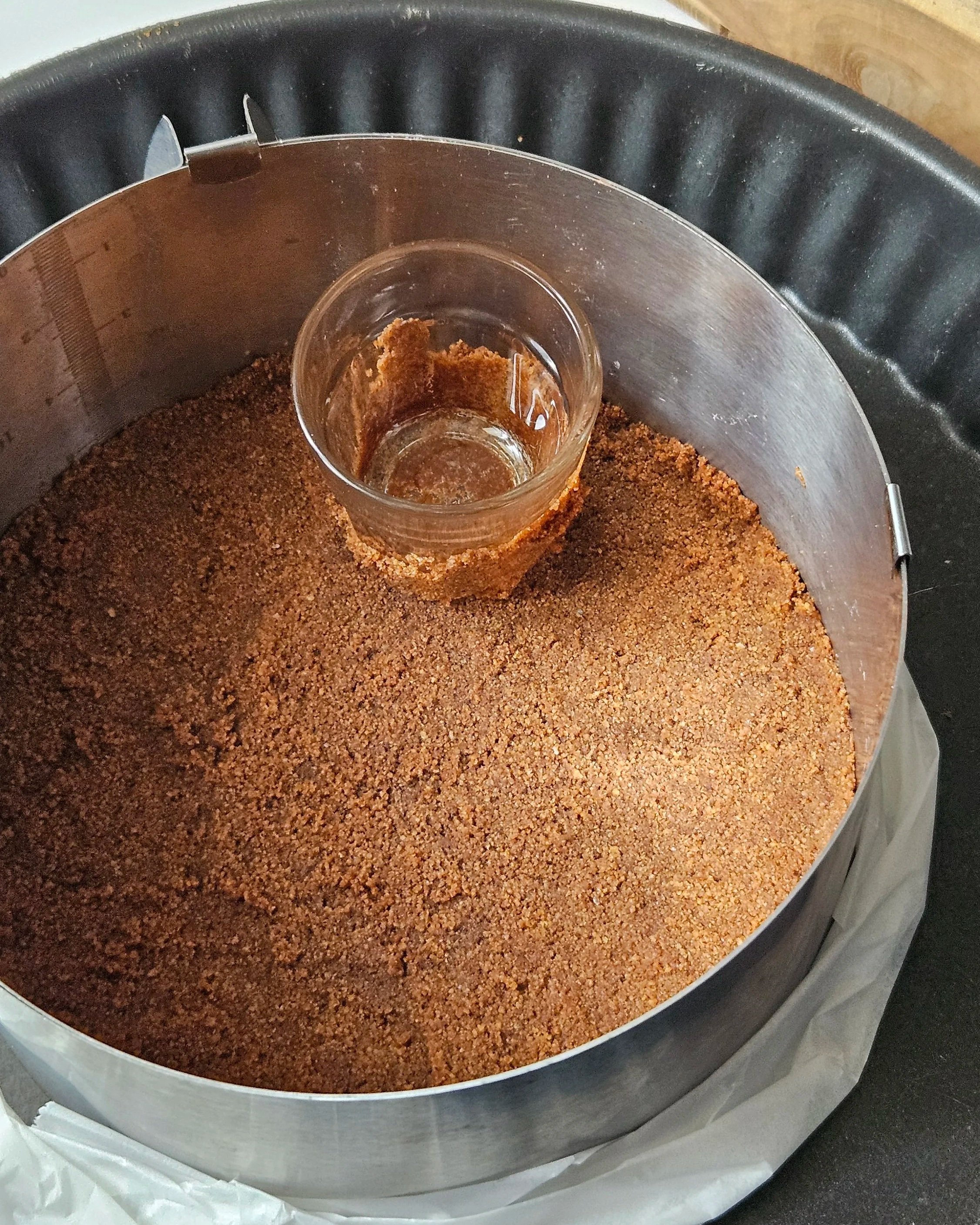
Gently press the crumbs down with the base of a glass to create an even layer, without compacting them too firmly.
3. Make the Chocolate Filling
Melt the dark chocolate in a heatproof bowl over a pan of gently simmering water. Allow it to cool slightly; it should remain fluid but no longer feel hot.
In a separate bowl, mix the Philadelphia and sugar on low speed, just until smooth.
Sift the cocoa powder and cornflour together, then add them to the cream cheese along with the vanilla and salt. Incorporate the sour cream.
Slowly pour in the melted chocolate, mixing on low speed until the colour is even throughout.
Add the eggs one at a time, waiting until the first is completely incorporated before adding the second.
Stop mixing as soon as the filling is smooth and evenly combined. There is no need to whip it or incorporate extra air.
At this stage, the filling should be thick, soft and almost mousse-like. When you draw a spatula across the surface, the marks should remain visible for a few seconds.
Transfer the mixture to the tin in spoonfuls. Gently press it into place with a spatula to remove any air pockets, then level the surface.
Tap the tin lightly on the worktop and allow the filling to rest for 10 minutes.
The right consistency: the filling should not be runny. Do not add milk or cream to loosen it.
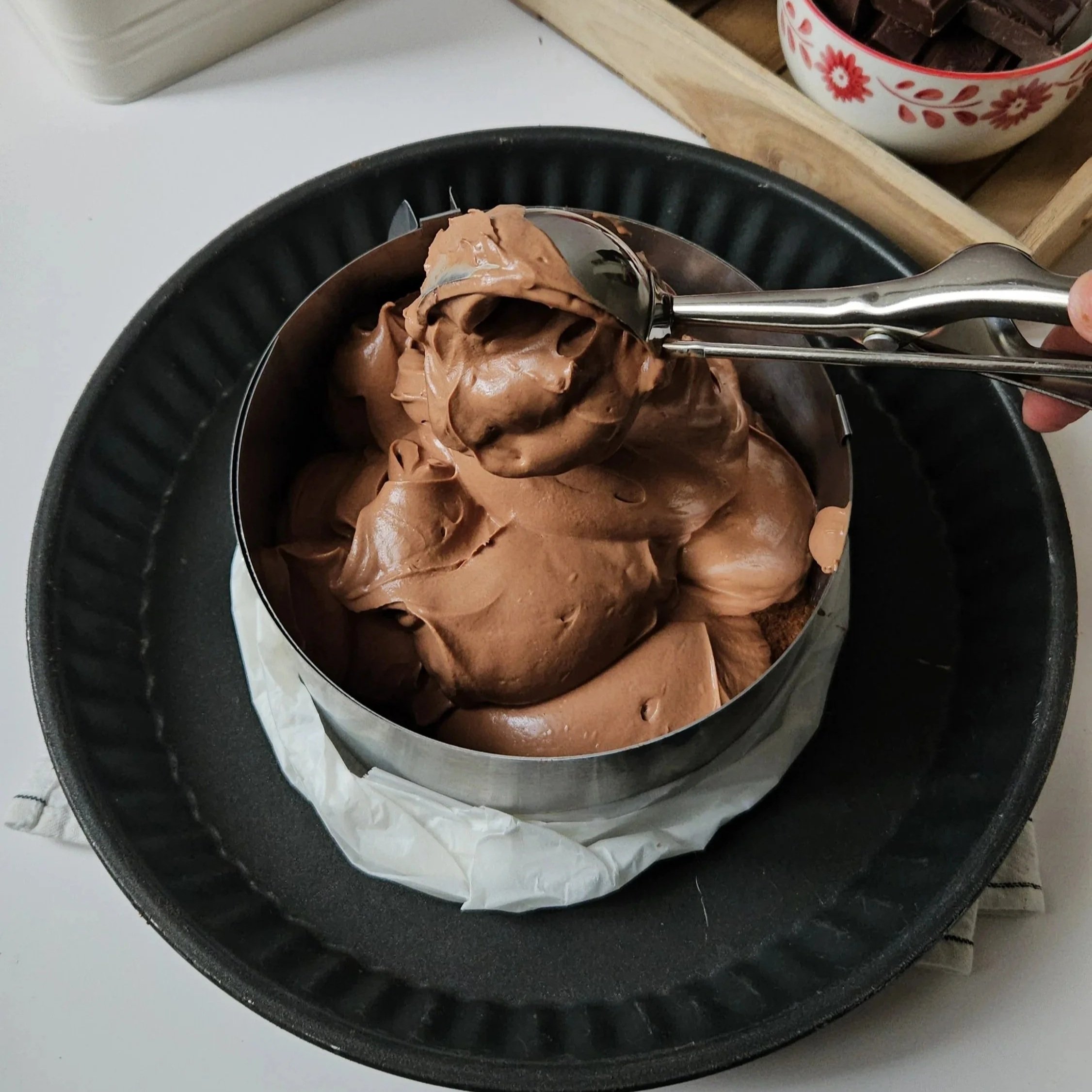
Before baking, the filling should be thick and soft, almost like a mousse. It should not be runny.
4. Bake the Cheesecake
Place an empty baking tray on the lower rack of the oven. Once it is in position, carefully pour boiling water into it using a heatproof jug.
The cheesecake will bake on the middle rack, above the water, without being immersed in it.
Bake at 150°C fan for 55 minutes.
At the end of baking, look for these signs:
The edges should be set and slightly raised.
The surface should appear firm, with no visibly liquid areas.
A central area of approximately 4–5 cm should still move slightly.
When the tin is gently moved, the centre should wobble evenly, rather than ripple like a liquid.
Do not wait for the centre to become completely firm. The cheesecake will continue to set as it cools.
Turn off the oven, leave the door slightly open and allow the cheesecake to rest inside for 30 minutes.
Transfer it to the worktop and let it cool completely without removing it from the tin.
Cover and refrigerate for at least eight hours, preferably overnight.
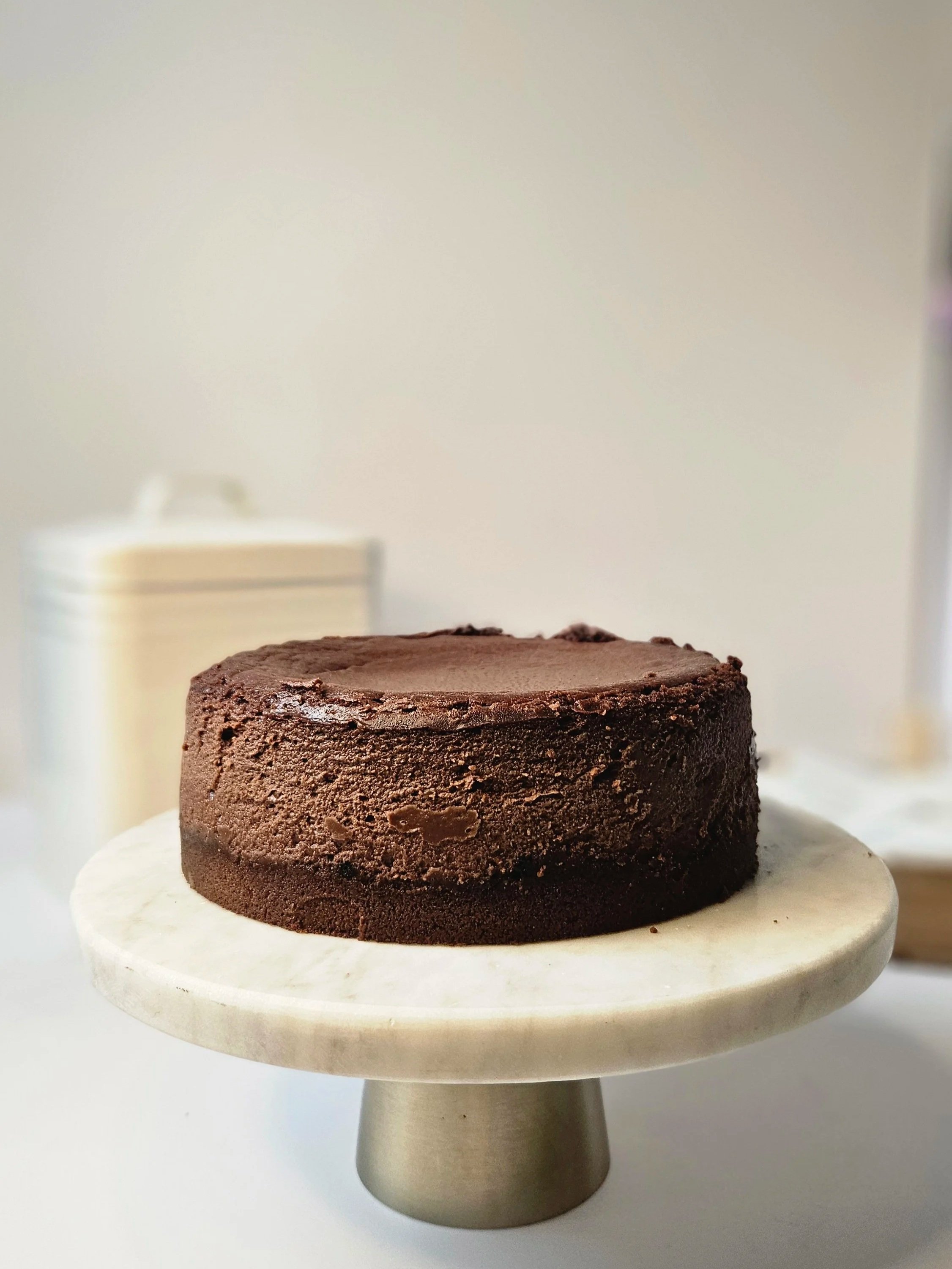
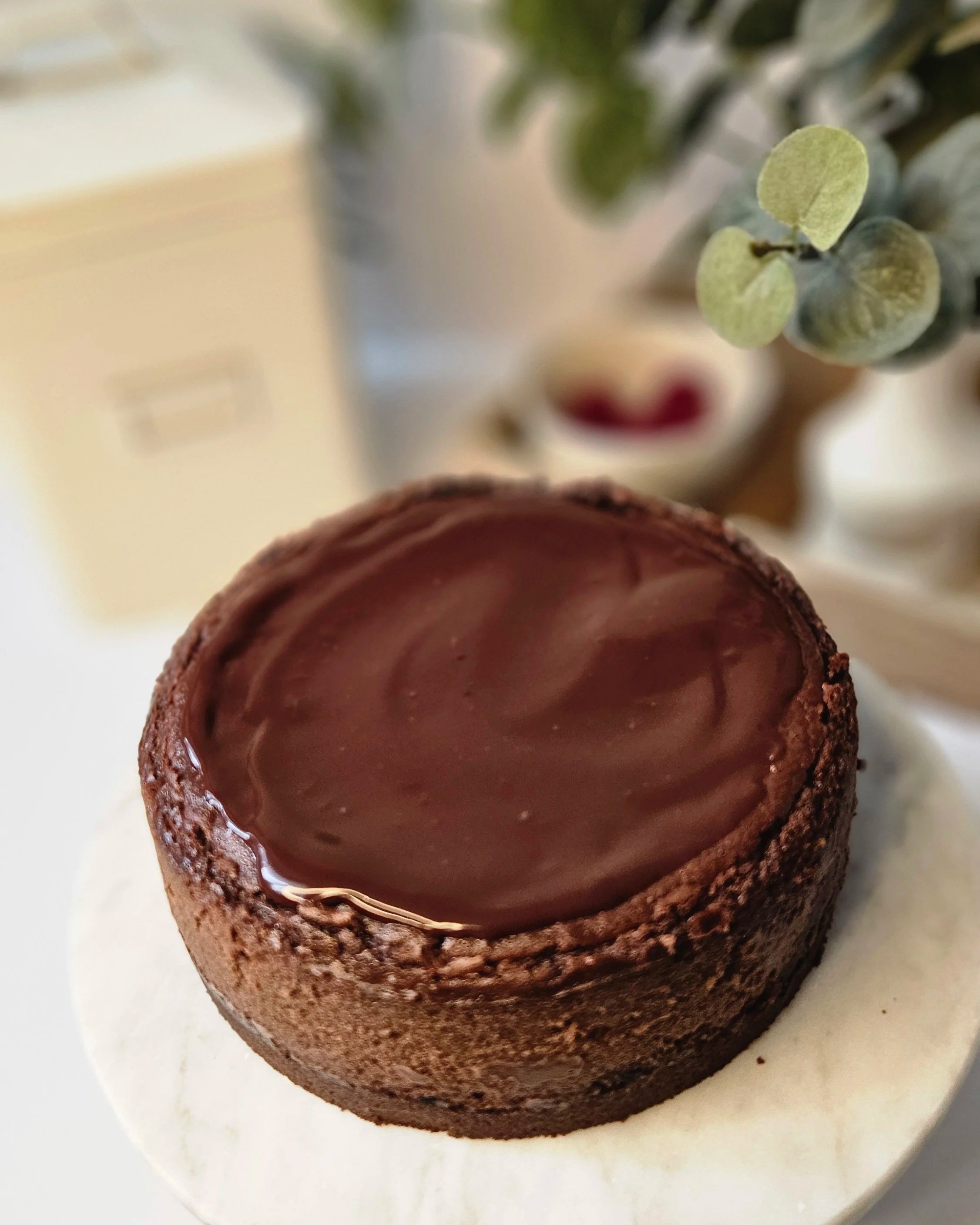
After chilling in the refrigerator, the cheesecake becomes firm enough to hold its shape, ready for its finishing layer of ganache.
5. Make the Barbera & Raspberry Reduction
You can prepare the reduction the day before.
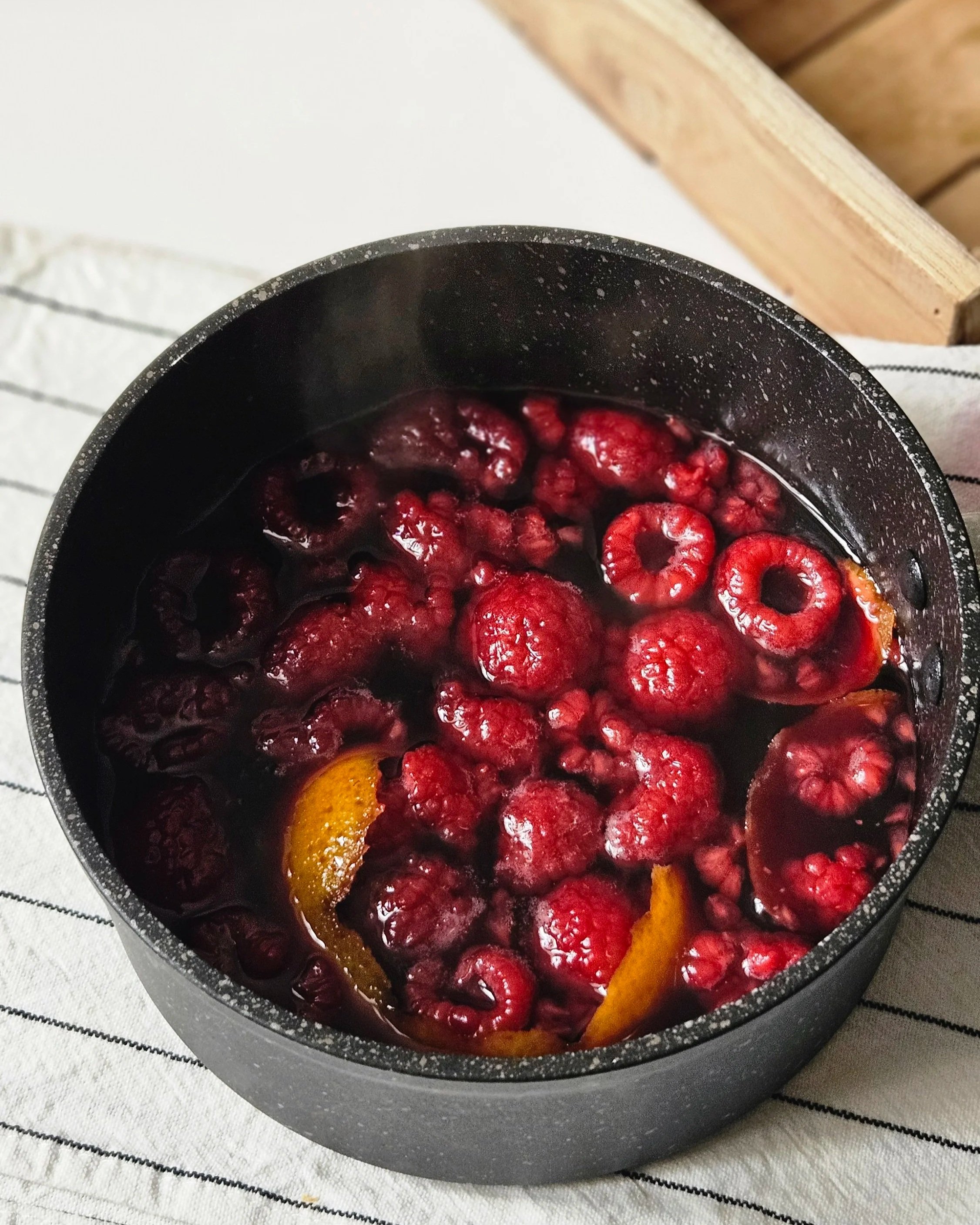
Combine the Barbera Appassimento, raspberries, orange peel, a very small pinch of salt and 35 g of sugar in a wide saucepan.
Bring to a very gentle simmer and cook uncovered over low heat. You should see small bubbles breaking the surface, rather than a vigorous boil.
After approximately 15 minutes, the raspberries should be very soft and break apart easily when pressed with a spoon.
Remove the orange peel, briefly blend the mixture and pass it through a fine-mesh sieve to remove the seeds.
Return the sauce to the saucepan and continue cooking over very low heat, stirring occasionally and more frequently as it reduces.
The reduction is ready when it weighs approximately 100–110 g and, while still warm, looks glossy and lightly syrupy.
To check the consistency, dip a teaspoon into the sauce. It should flow off in a continuous stream rather than run like water, leaving a thin coating on the back of the spoon.
Draw a finger across the back of the spoon: the line should remain visible for a few seconds.
Taste the reduction. If it is too tart, gradually add up to the remaining 10 g of sugar, checking the balance as you go.
Remove from the heat and allow to cool completely. Once cold, the reduction should be thicker but still fluid enough to flow slowly over a slice.
Do not reduce it to a jam-like consistency. It will thicken further as it cools.
6. Make the Dark Chocolate Ganache
Prepare the ganache once the cheesecake is completely cold.
Finely chop the chocolate and place it in a bowl.
Heat the cream until it is just about to boil, then pour it over the chocolate. Leave undisturbed for one minute.
Using a spatula, stir gently from the centre outwards until the ganache is smooth and glossy.
Allow it to cool slightly for approximately 10 minutes.
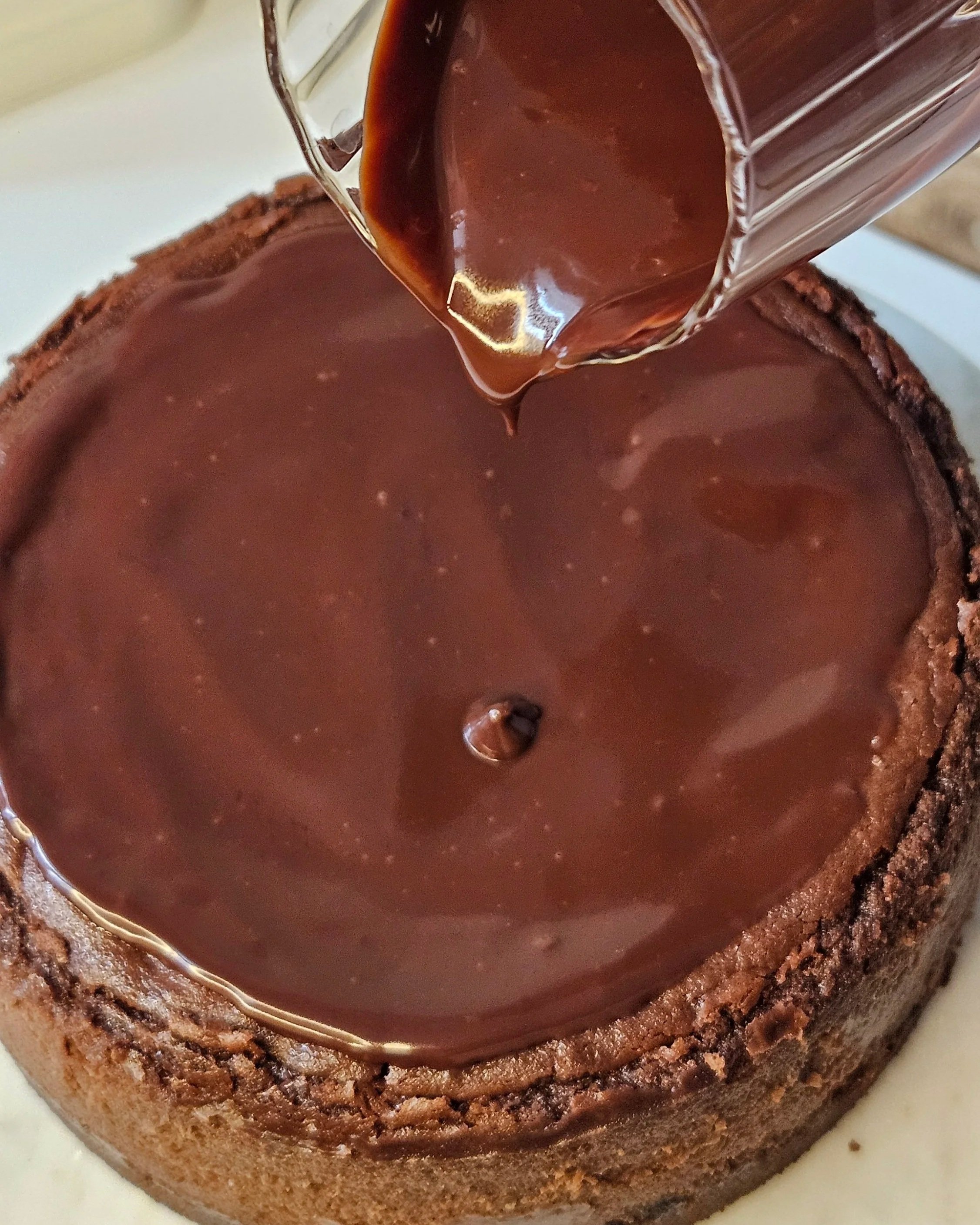
Pour a thin layer over the cheesecake, still inside its tin, and level gently without allowing the ganache to run down the sides.
Return the cheesecake to the refrigerator, keeping it in the tin until ready to serve.
7. Finish and Serve
Remove the cheesecake from the refrigerator 30–40 minutes before serving, leaving it in the tin initially.
Carefully release the springform ring. If it resists, wrap a warm cloth around the outside of the tin or run a thin knife around the edge.
For neat slices, use a long knife dipped in hot water, wiping it dry after each cut.
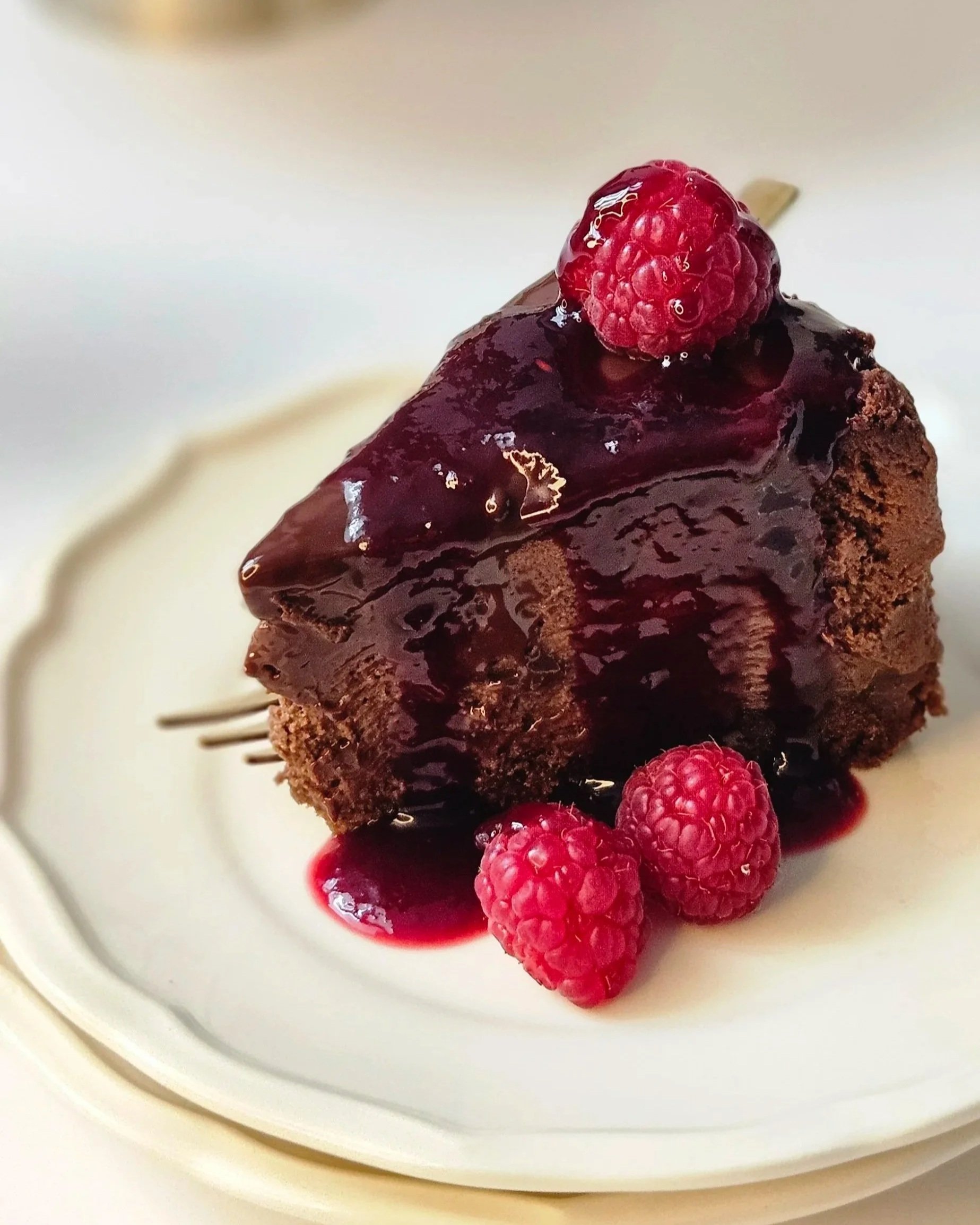
Place a slice on a plate and finish with the Barbera reduction.
Approximately one teaspoon per slice is enough, as the reduction is intense and concentrated. Arrange it beside the cheesecake in a short line or a few small dots, or drizzle a thin ribbon over the surface.
If you like, finish with two or three fresh raspberries.
GHC Kitchen Notes.
✦ A Filling That Looks Like Mousse
Before baking, the mixture should be thick and airy, not fluid. This is exactly the consistency you want. Resist the temptation to loosen it with milk or cream.
✦ Keep the Mixing Gentle
Incorporate the ingredients carefully, particularly the eggs. Too much air can cause the cheesecake to rise excessively and crack during baking.
✦ The Centre Should Still Wobble
When the cheesecake comes out of the oven, the centre should retain a gentle wobble. This is one of the most useful signs that you have not baked it for too long.
✦ Let the Refrigerator Do Its Work
After chilling, the filling changes texture: stable enough to slice, yet still creamy inside. Never remove the springform ring while the cheesecake is warm.
✦ Keep a Little Tartness in the Reduction
Do not try to eliminate all the acidity with extra sugar. The chocolate filling and ganache provide the balance when everything is tasted together.
✦ A Little Sauce Goes a Long Way
This cheesecake is already rich and intense. The reduction should complement it, not overwhelm it. One teaspoon per slice is a good starting point, with the option of adding a little more to taste.
Storage
Cheesecake — Store well covered in the refrigerator for up to 3 days.
Barbera reduction — Keep separately in an airtight container in the refrigerator for 4–5 days.
Before serving — Leave the cheesecake at room temperature for 30–40 minutes, keeping it in the tin until you are ready to release the ring.
Add the reduction only when serving each slice.
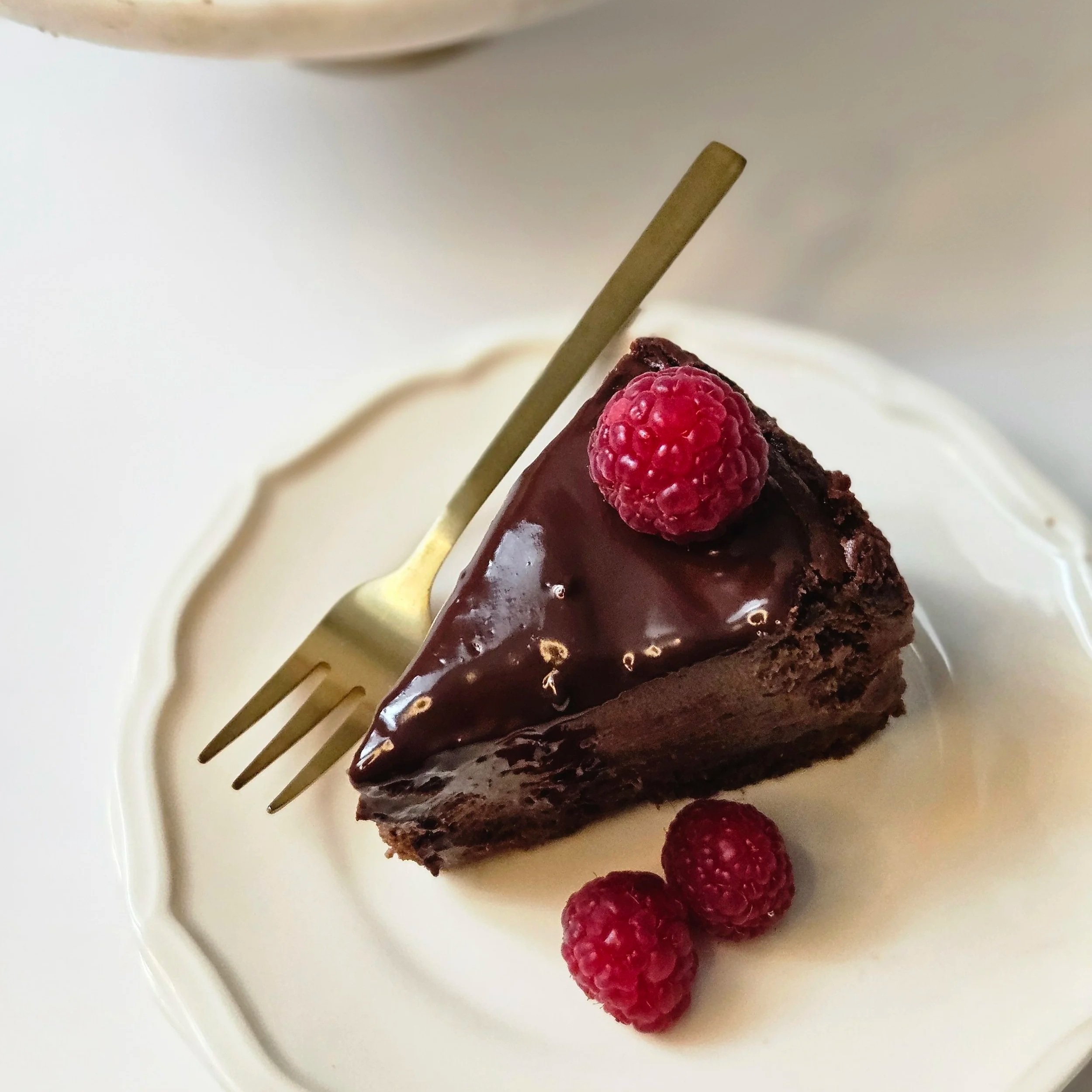
The cheesecake, sliced to reveal a firm yet creamy filling, finished with a thin layer of dark chocolate ganache.
The Recipe
A baked chocolate cheesecake with a cocoa Digestive crust, a rich dark chocolate filling, smooth ganache and a Barbera Appassimento and raspberry reduction.
Makes: 6–8 servings
Preparation: 45 minutes
Crust baking: 10 minutes
Cheesecake baking: 55 minutes
Oven resting: 30 minutes
Refrigeration: at least 8 hours
Tin: 16 cm springform tin, at least 7 cm deep
Oven: 170°C fan for the crust; 150°C fan for the cheesecake
Difficulty: Medium
○ Wide saucepan
○ Hand blender
○ Fine-mesh strainer
○ Long knife
○ Aluminium foil
✦ The Kitchen Edit
○ Food processor for the biscuits
○ Mixing bowls
○ Electric hand mixer with adjustable speed
○ Spatula
○ Fine sieve
○ Baking tray for the water
○ Heatproof jug
Ingredients
FOR THE GANACHE
□ 80 g dark chocolate, 55–60% cocoa
□ 80 g whipping cream
FOR THE BARBERA APPASSIMENTO REDUCTION
□ 250 ml Barbera Appassimento wine
□ 80 g fresh or frozen raspberries
□ 35 g granulated sugar
□ Up to 10 g additional granulated sugar, if needed
□ 1 strip of orange peel, without the white pith
□ A very small pinch of fine salt
TO FINISH
□ Fresh raspberries, optional
□ A small chocolate curl, optional
FOR THE COCOA DIGESTIVE CRUST
□ 150 g plain Digestive biscuits
□ 65 g butter
□ 8 g unsweetened cocoa powder
□ A pinch of fine salt
FOR THE CHOCOLATE CHEESECAKE FILLING
□ 400 g Philadelphia Original cream cheese
□ 100 g sour cream
□ 90 g granulated sugar
□ 150 g dark chocolate, 55–60% cocoa
□ 10 g unsweetened cocoa powder
□ 8 g cornflour (cornstarch)
□ 100 g eggs, approximately 2 medium eggs without shells
□ 1 tsp vanilla extract
□ A pinch of fine salt
Instructions
① Prepare the Tin
Allow the Philadelphia, sour cream and eggs to come to room temperature for approximately 45–60 minutes.
Wrap the outside of the tin's base and the join with the springform ring in aluminium foil.
② Make the Cocoa Crust
Preheat the fan oven to 170°C.
Finely crush the Digestive biscuits and mix with the cocoa powder and salt. Add the melted butter and combine until the texture resembles wet sand.
Spread the mixture evenly over the bottom of the tin, without building up the sides. Press down gently to form an even layer.
Bake for 10 minutes, allow to cool slightly and reduce the oven temperature to 150°C fan.
③ Make the Chocolate Filling
Melt the chocolate over a pan of gently simmering water and allow it to cool slightly.
Mix the Philadelphia and sugar on low speed. Add the sifted cocoa powder and cornflour, vanilla and salt, then incorporate the sour cream.
Slowly pour in the melted chocolate, mixing until the colour is uniform.
Add the eggs one at a time, without whipping. Stop as soon as the filling is smooth, thick and mousse-like.
Spoon into the tin, gently pressing out any air pockets with a spatula. Level the surface, tap the tin lightly and leave to rest for 10 minutes.
④ Bake the Cheesecake
Place an empty baking tray on the lower oven rack and carefully pour boiling water into it using a heatproof jug.
Bake the cheesecake on the middle rack, above the water, at 150°C fan for 55 minutes.
It is ready when the edges are set, the surface has no liquid areas and the central 4–5 cm still wobble gently.
Turn off the oven, leave the door slightly open and rest the cheesecake inside for 30 minutes.
Allow to cool completely in the tin, then cover and refrigerate for at least 8 hours, preferably overnight.
⑤ Make the Barbera Reduction
Combine the Barbera, raspberries, orange peel, salt and 35 g of sugar in a wide saucepan.
Bring to a very gentle simmer and cook for approximately 15 minutes, until the raspberries are completely soft.
Remove the orange peel, blend briefly and pass through a fine-mesh sieve.
Return the sauce to the saucepan and continue reducing over very low heat, stirring, until it weighs approximately 100–110 g.
It should be glossy, lightly syrupy and coat the back of a teaspoon.
Taste and, only if necessary, gradually add up to the remaining 10 g of sugar.
Allow to cool completely.
⑥ Make the Ganache
Finely chop the chocolate and place it in a bowl.
Heat the cream until just below boiling, pour it over the chocolate and wait one minute.
Stir gently from the centre outwards until smooth and glossy.
Allow to cool slightly for approximately 10 minutes, then spread a thin layer over the cold cheesecake, still in its tin.
Level without allowing the ganache to run down the sides, and refrigerate until ready to serve.
⑦ Finish and Serve
Remove the cheesecake from the refrigerator 30–40 minutes before serving.
Carefully release the tin and slice with a long knife dipped in hot water and wiped dry after each cut.
Serve each slice with approximately one teaspoon of Barbera reduction, arranged as a short line or a few dots on the plate, or drizzled in a thin ribbon over the cheesecake.
Finish with two or three fresh raspberries, if desired.
Recipe Note
The cheesecake is ready when the edges are set and the centre retains a gentle wobble. Do not extend the baking time simply to make the centre completely firm.
Serve the reduction separately and in small quantities. Approximately one teaspoon per slice is enough to complement the chocolate without overwhelming its flavour.